1682
What AI for all looks like in practice: Six lessons from 1682
What speakers from Wawa, HubSpot, ServiceNow, and more shared about scaling AI beyond individual wins.
Last year, the conversation at 1682 was about moving AI from pilot to proof. This year, it moved to the next question: how do you scale individual wins into something the whole company can use?
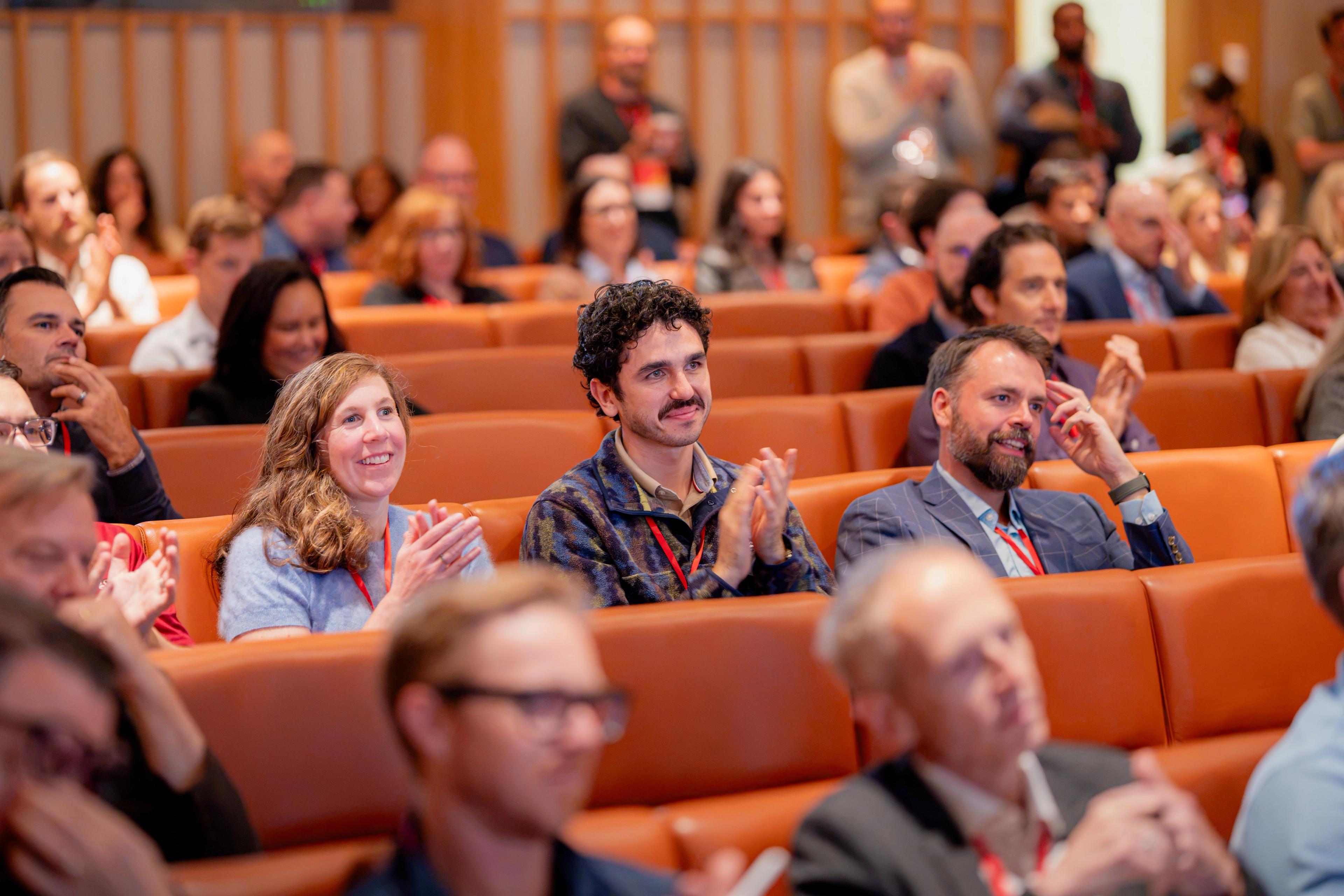
Across ten talks and fireside chats at the Barnes Foundation, all built around this year’s theme of AI for all, speakers kept landing on the same answer: anyone can build with AI now, and the hard part is everything around it.
Mike Gadsby of O3XO set that up in the opening keynote. Studies from BCG and MIT have documented the productivity gains individuals get from AI. The bigger opportunity is scaling those gains into organizational capability, moving from personal experimentation to team process to internal products. The speakers who followed showed what that looks like in practice, including where it goes wrong.
Missed the event? Here are six lessons from the day.
1. Anyone can build now
Bottom line upfront: The people closest to a problem can now build the fix themselves, without waiting on IT or engineering.
That shift showed up across industries. Frontline teams, project managers, and even CEOs are building their own tools to remove friction from daily work.
Proof in action:
- Brett Norton, president of Buffalo Construction, builds what he calls "toothpick" tools: small fixes he needs right away. His team cut project closeouts from as long as 120 days to as few as 25, and estimating 1,500-page bid specs went from 10 days to 2.
- At O3, our project managers maintain Dialed, an internal resource and pipeline planning tool built with Lovable. It replaced a tool that cost about $35,000 a year and now runs on roughly $127 in credits. Updates that used to take six months now happen in real time, sometimes during the call where someone asks for them.
- The Barnes Foundation rebuilt its Barnes Focus art-recognition app with AI. It now runs 5x faster, and operating costs dropped 97% after the Barnes stopped relying on an outside vendor.
What this means for you: Start with the work your team repeats. Brett's rule of thumb is simple: if you've done a task two to four times, automate it. And treat AI skills as role-specific. A sales lead, an operations manager, and an engineer each need different ones.
2. Process before prompts
Bottom line upfront: AI exposes broken processes. It won't fix them for you.
Several speakers made the same point from different angles. Companies seeing results with AI got clear on how their work actually gets done before they picked a tool.
Proof in action:
- West Shore Home grew from an $18 million business to a run rate of about $1 billion. Danny Fisher explained that the company became an AI company by being a process company first. Today, a bathroom remodel goes from sale to install in about seven days.
- Wawa's customer experience blueprint surfaced more than 550 friction points. Mike Pitone's team found four themes behind most of them: getting orders right, making things easy, keeping customers informed, and recognizing them. That pattern is now the foundation for an AI tool that helps the team decide what to fix first.
- Marjón Dean of ServiceNow described this as "organizational debt": processes layered on over years of growth and acquisitions that surface fast once AI touches them.
What this means for you: In Danny's words, "AI doesn't need a use case, it needs a process." Map the workflow before you automate it. When the data underneath is messy, clean it up in order of impact rather than trying to fix everything at once.
3. Context matters more than the model
Bottom line upfront: Today's models can handle nearly any task. What they don't have is accurate knowledge about your company.
Proof in action:
- Rick Nucci of Guru argued that the lasting problem in enterprise AI is "accuracy. Not access." With a new model shipping roughly every 11 days, building around a model's current weaknesses is a short-lived bet.
- HubSpot applied the same idea to marketing. Christina Clark shared that 42% of HubSpot's prospects used AI search to evaluate the company, and it turned out to be the strongest signal of purchase intent. By making its content the answer AI tools cite, HubSpot saw up to 1,850% more AI-referred qualified leads and 3x the conversion rate.
What this means for you: Invest in the knowledge your AI draws from. Inside the company, that means trusted, permissioned information. Outside it, Christina's advice applies: make each section of a page a complete answer on its own, back claims with real data, and keep your voice consistent across channels.
4. Let it sprawl, then consolidate
Bottom line upfront: When building gets cheap, the new risk is sprawl. Experiment widely, then fold what works into one governed tool with a clear owner.
Proof in action:
- Lazar Jovanovic of Lovable shared that one customer gave every employee a license, built 295 apps in six months, and found it needed just 9.
- Lovable's own internal sales tool spread from one team to every department and saved the company about $1 million in software costs.
- Buffalo Construction uses an AI Council to keep experiments from turning into silos.
What this means for you: Lazar outlined four steps: interview coworkers the way you'd interview customers, build together, put guardrails around one main app, and name someone accountable for it. Rick offered a similar starting point: pick one workflow, one outcome, and one team.
5. From human in the loop to managing the loop
Bottom line upfront: As AI agents take on more work, it is no longer feasible for people to lopped into every task. People need to shift from checking every step to setting direction and owning the outcome.
Proof in action:
- Ethan Mollick of Wharton pointed out that no one reads 20 hours of agent output line by line. "I don't think you could be in the loop anymore," he said. "I think you could manage the loop."
- Marjón Dean sorts work into three buckets: fully automated, human in the loop, and human-owned. The last bucket, covering trust, creativity, and what sets a company apart, is its secret sauce.
- Ophir Samson of Greenhouse demonstrated a live AI voice interview on stage. When an audience member tried to trick it, the AI held its ground, and it declined to ask about parental leave. When Zapier used voice screening, it reached 10x more candidates, and 97% rated the experience excellent.
What this means for you: Decide which work belongs in each bucket before rolling out agents. Then build the governance to match. Mike Gadsby's priorities: an AI policy that works as a living system rather than a document nobody reads, a clear record of what AI can access and do, and testing that grows as your solutions get more complex.
6. Bring your people with you
Bottom line upfront: The people side of AI change is the part companies most often underestimate.
Proof in action:
- Marjón Dean described the "whiplash" employees feel when new tools, new processes, reorganizations, and role uncertainty arrive all at once. ServiceNow now shares a three-month outlook every quarter so changes don't land as surprises.
- At ServiceNow, roles that AI displaces are reallocated rather than eliminated, with the goal of moving people into higher-value work they enjoy more. Marjón was candid that no one is getting this completely right yet.
What this means for you: Communicate more than feels necessary. When things go unsaid, people fill in the blanks themselves. Build feedback loops, push back on artificial deadlines, and give employees time to adjust before you scale. As Marjón put it, trust is the only currency in change.
Putting these lessons into action
The common thread across 1682 was that AI success depends less on which model you choose and more on how your organization works around it.
That's how we work at O3. Strategy, design, and engineering overlap from the start, so ideas get tested early and the people shaping the solution are the ones who build it. Through O3XO, we bring AI into that same team, helping you find where it can make the biggest difference, then moving from experimentation into practical implementation. If your team is somewhere between individual wins and company-wide adoption, let's talk.
Related Insights
More ideas worth looking into.


Let’s put some of this thinking to work.
If something here sparked an idea, surfaced a challenge, or got you thinking differently, we’d love to talk about what could be next.