
Weeks to build, minutes to audit: how our marketing team runs on Sanity CMS
How we built O3’s digital platform with Sanity and Claude, and what it changes for marketing teams that want to move faster.
A complete digital experience overhaul used to take us three months or more. The new O3 site took a few weeks of production time. In true shoemaker’s fashion, the full project took a lot longer.
The speed came from how we built it. We designed in Claude Design, refined in Figma, built on Sanity CMS, and automated the content migration from WordPress. Our design system in Figma is set up for AI, so designers kept working in Figma while Claude Code pulled their UI updates straight into the codebase. Then we connected Claude to the CMS and kept going.
This spring we announced our Sanity partnership and wrote about what an AI-connected CMS can do for a marketing team. This is what happened when we did it on our own site.
Why we chose Sanity
Sanity is headless, so our content isn't locked into one website. It's structured so AI tools and agents can work with it directly. Claude and our sales tools now pull from the same content as the website.
From design to launch in weeks
Most site builds slow down in the handoffs. Design waits on feedback, development waits on design, and content waits on development. When you’re your own client, client work and the 1682 Conference come first.
We shortened each step. Claude Design let us explore layouts quickly. Figma is where the team refined them. Our developers built those designs as Sanity components that our marketing team can reuse.
Claude does the tedious work
Once the site was live, we connected Claude to Sanity using the Sanity MCP connector. We started with an SEO and GEO analysis.
Claude scanned the entire site in minutes and rewrote meta descriptions across more than 100 pages. The changes showed up in Sanity as drafts almost immediately. Claude can publish on its own, but our team reviewed every change first.
SEO was only the start. The same connection can update alt text, add internal links, make AEO updates for AI search, edit content, and create new pages.
This used to be slow, manual work. We’d audit the site in Semrush, build a list of changes, and wait for a developer to make every edit. Now marketing makes those changes directly. The possibilities are endless, and the operational efficiency for enterprise marketing teams is real.
What publishing looks like now
Our marketing team edits directly on the page in a visual editor. Click a headline and type.
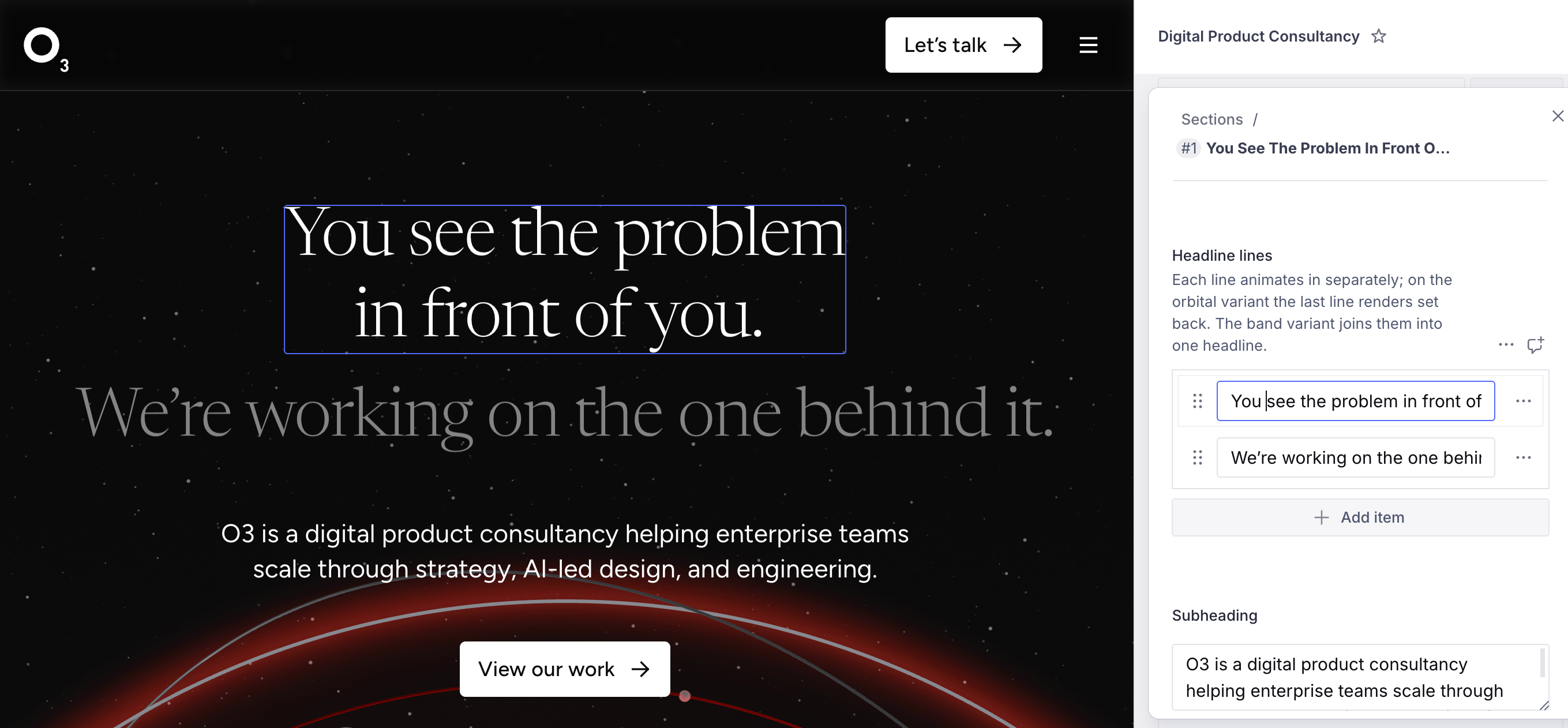
To create a new page, we describe what we want in Claude or Sanity, and it’s built from our AI-ready design system. Every edit starts as a draft, so nothing goes live until someone hits publish. Every page has its own SEO fields.
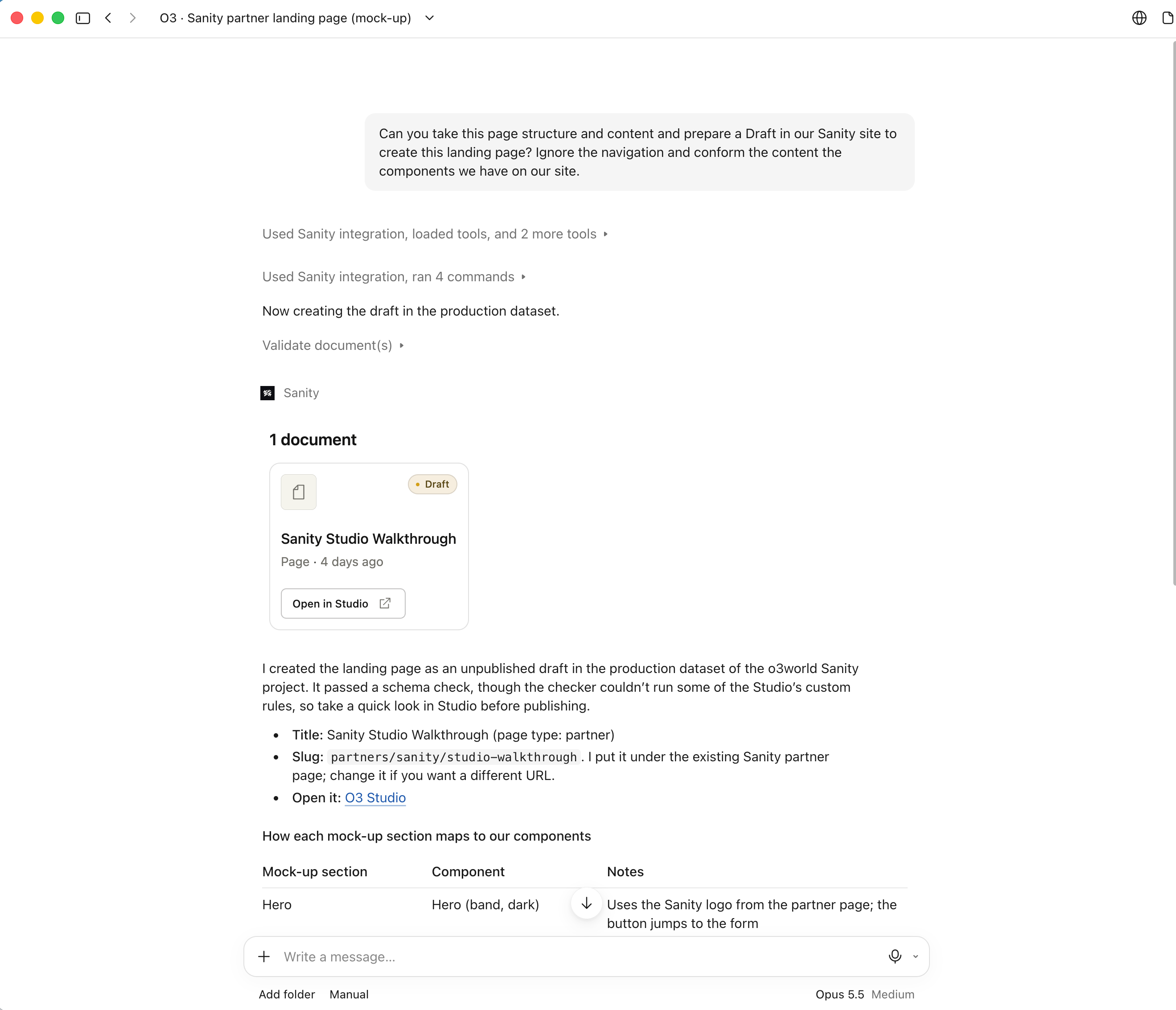
The bigger change is what marketing can do without a developer. On our old site, a page with a new layout meant a development ticket. Now our team builds those pages from existing components, often starting with a prompt. That’s how people expect to work today, and not every CMS supports it.
Developers are still critical. Large new features still need engineering. But the everyday work of running a site now belongs to the people who own the content. That only works because of how our engineers set up the system. They designed the content schema and extended Sanity’s features around how our small marketing team works.
What this means for our clients
We built our site this way because it’s how we build for clients: design faster, build on structured content, connect AI, and keep improving after launch. It also sets the site up for personalization, showing different content to different visitors.
For a client, that could mean getting to a working site sooner, with more control for their marketing team from day one. Their team can edit wherever they already work, including Slack and Claude.
For enterprise teams, it means less red tape. We can set up user roles and permissions so people move quickly with guardrails in place. Prompt-to-page lets marketing build campaign pages with fewer resources, so they can launch more campaigns without waiting on IT.
If your team is weighing Sanity, or waiting on developers to change a headline, see the Studio behind this site.
Related Insights
More ideas worth looking into.




Let’s put some of this thinking to work.
If something here sparked an idea, surfaced a challenge, or got you thinking differently, we’d love to talk about what could be next.